

Inside the 2026 Binance Hack: How Hackers Stole $6.3 Billion in Crypto
Dilip Sharma
Author

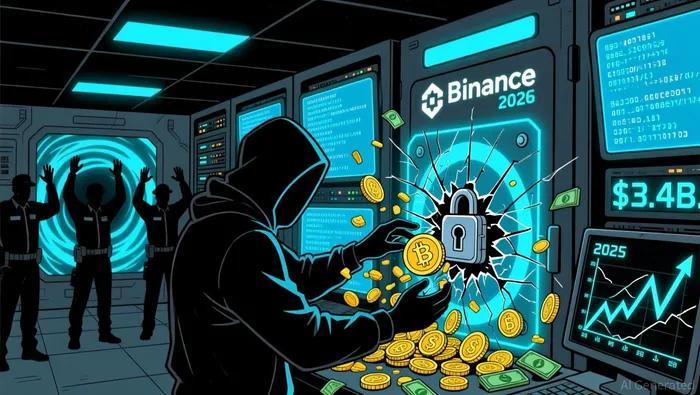
Inside the 2026 Binance Hack: How Hackers Stole $6.3 Billion in Crypto
A Deep Dive into the Attack, Exploitation Techniques, North Korean Attribution, Blockchain Investigation, and Critical Security Lessons
On October 29, 2026, the cryptocurrency industry faced an extraordinary security incident when Binance, one of the world's largest cryptocurrency exchanges, suffered a massive compromise involving approximately $6.3 billion worth of digital assets.
The incident involved unauthorized withdrawals from Binance's hot wallets across nine blockchain networks. What makes this attack particularly concerning is that the attackers reportedly abused trusted internal infrastructure and transaction authorization mechanisms rather than simply stealing wallet private keys.
The FBI subsequently attributed the attack to North Korea and identified the associated cyber activity as TraderTraitor.
But how did the attackers gain access? How could a system authorize transactions that its legitimate operators never intended? How did billions of dollars move across different blockchain networks? And what can technology companies learn from this incident?
Let's investigate the incident step by step.
1.Understanding Binance and Its Wallet Infrastructure
Before understanding the attack, it is important to understand how cryptocurrency exchanges manage digital assets.
Binance is a global cryptocurrency exchange that allows users to buy, sell, trade, and store digital assets such as Bitcoin (BTC), Ethereum (ETH), BNB, and stablecoins.
Like other large exchanges, Binance maintains different types of wallets to manage customer assets.
Hot Wallets
Hot wallets are connected to online infrastructure and allow exchanges to process withdrawals and transactions quickly.
Their primary responsibilities include:
Processing customer withdrawals.
Sending cryptocurrency between blockchain networks.
Managing operational liquidity.
Executing authorized transactions.
Because hot wallets are connected to systems that communicate with the internet, they require strong security controls.
Cold Wallets
Cold wallets are designed to keep cryptocurrency away from continuously connected online systems.
They are generally used for long-term storage and require additional security procedures before funds can be transferred.
The important distinction: Hot wallets prioritize operational speed, while cold wallets prioritize isolation and security.
In this incident, the affected assets were associated with Binance's hot wallet infrastructure, not a publicly established compromise of all its cold storage systems.
2.What Actually Happened on October 29, 2026?
According to Binance's official security announcement, unauthorized withdrawals occurred at approximately 20:05 UTC on October 29, 2026.
The estimated financial impact was approximately $6.3 billion in digital assets.
Blockchain intelligence company Bitquery independently traced the transfers and reported that:
17 Binance hot wallets were affected.
Nine blockchain networks were involved.
Approximately $6.3 billion in assets was transferred.
The main attack activity took place in under four hours.
Ethereum accounted for approximately $3.8 billion of the reported losses.
The Financial Impact
Metric | Reported figure |
|---|---|
Total assets stolen | $6.3 billion |
Approximate INR equivalent | ₹55,000+ crore |
Hot wallets affected | 17 |
Blockchain networks | 9 |
Ethereum-related losses | $3.8 billion |
Assets frozen or rescued | $2.7 billion |
Remaining with attacker | Approximately $3 billion |
Note: Blockchain tracking figures are snapshots, not final audited recovery amounts. The INR equivalent is approximate.
Which Blockchain Networks Were Involved?
The investigation identified activity across several networks, including:
Ethereum
Bitcoin
TRON
Solana
XRP Ledger
Arbitrum
Base
Optimism
Polygon
This demonstrates how a coordinated attack against centralized exchange infrastructure can affect multiple independent blockchain ecosystems.
3. How Did the Attackers Gain Access?
One of the most important aspects of this incident was the suspected compromise of internal infrastructure.
In its initial investigation, Binance indicated that a DevOps engineer's laptop may have been compromised.
According to Binance's October 30 announcement, the initial investigation suggested that the attacker gained access to an internal service container and submitted unauthorized withdrawal transactions.
However, Binance also stated that subsequent investigation uncovered additional points of compromise.
The complete technical attack chain has not been publicly established.
Understanding the Suspected Attack Path
Consider the following simplified architecture:
DevOps Engineer's Laptop
          |
          v
Internal Authentication
          |
          v
Compromised Internal Service
          |
          v
Withdrawal Processing System
          |
          v
Transaction Authorization
          |
          v
Hot Wallet
          |
          v
Blockchain Network
The central security problem was that the attacker reportedly managed to abuse infrastructure that had legitimate access to transaction-signing capabilities.
Why Is This So Dangerous?
Imagine a bank where the physical vault remains secure, but an attacker compromises the internal approval system.
Instead of stealing the vault key, the attacker manipulates the process that authorizes access to the vault.
The vault may remain physically secure, but the system responsible for approving withdrawals is no longer trustworthy.
A similar distinction matters in cryptocurrency infrastructure:
Protecting private keys is not enough. The complete transaction authorization pipeline must also be protected.
4. The EIP-7702 Exploitation: Understanding the Ethereum Attack
One of the most technically interesting discoveries came from Bitquery's blockchain investigation.
The attackers reportedly abused Ethereum's EIP-7702 authorization mechanism to execute attacker-controlled code through Binance's main Ethereum hot wallet.
What Is EIP-7702?
EIP-7702 is an Ethereum improvement proposal introduced as part of the Pectra upgrade.
It allows an externally owned account (EOA), traditionally controlled by a private key, to temporarily delegate execution to smart contract code.
This is a legitimate Ethereum capability designed to support more flexible account functionality.
However, like any powerful technology, it must be implemented and authorized securely.
How Was It Abused?
According to Bitquery's investigation:
The attacker prepared multiple EIP-7702 authorization requests targeting Binance's Ethereum hot wallet.
Approximately 50 nonce-based authorizations were submitted.
Binance's transaction-signing infrastructure signed these authorizations.
One authorization matched the wallet's required nonce.
The authorization enabled attacker-controlled code to execute through the wallet.
The attacker repeatedly invoked the malicious functionality to transfer assets.
Visualizing the Exploitation
Binance Ethereum Hot Wallet
           |
           v
EIP-7702 Authorization Requests
           |
           v
50 Nonce-Based Authorizations
           |
           v
One Valid Authorization
           |
           v
Attacker-Controlled Code
           |
           v
Unauthorized Asset Transfers
           |
           v
Attacker-Controlled Wallets
Bitquery reported that the attacker's code remained active on the main Ethereum wallet for approximately 3 hours and 50 minutes.
One major transaction transferred approximately:
167,464 ETH
1.6 billion USDT
62 additional tokens
The key lesson is that EIP-7702 itself is not a vulnerability. The reported incident involved the abuse of authorization and signing infrastructure.
5. How Did the Attackers Move $6.3 Billion?
The attackers did not move every asset through a single transaction.
Instead, the funds were transferred across different blockchain networks and receiving wallets.
Bitquery traced unauthorized transfers from 17 Binance hot wallets across nine networks.
Understanding the Fund Movement
Binance Hot Wallets
        |
        v
Attacker-Controlled Addresses
        |
        v
Multiple Blockchain Networks
        |
        v
Token Transfers and Swaps
        |
        v
Cross-Chain Bridges and DeFi
        |
        v
New Wallet Addresses
The use of multiple networks and addresses made the investigation more complex.
However, blockchain transactions remain publicly recorded, allowing investigators to analyze transaction histories and follow asset movements.
Why Did the Attackers Convert Stablecoins?
Stablecoins such as USDT and USDC are designed to maintain relatively stable values.
Their issuers can implement address-freezing mechanisms under certain circumstances.
This creates an important difference between centralized stablecoins and decentralized cryptocurrencies.
For example:
Tether can freeze certain USDT addresses.
Circle can freeze certain USDC addresses.
Bitcoin does not have a central issuer capable of freezing an individual BTC wallet.
According to Bitquery, approximately $729 million in stolen USDT moved before relevant freezes were applied.
The investigation also identified swaps into ETH and TRX and activity involving decentralized finance protocols.
6. How Much Money Was Frozen or Recovered?
After the incident, Binance worked with law enforcement agencies, blockchain intelligence firms, token issuers, and industry partners.
These organizations attempted to trace and restrict the movement of affected assets.
Bitquery reported approximately $2.7 billion in frozen or rescued assets as of its November 2 investigation snapshot.
Understanding the Difference
It is important to distinguish between three different financial terms:
Frozen: Assets are restricted and cannot currently be transferred through the relevant issuer or protocol mechanism.
Recovered: Assets have actually been returned or secured for the rightful owner.
Replenished: The affected company replaces the financial value using its own reserves or treasury.
These terms are not interchangeable.
Binance publicly committed to absorbing the financial impact through its SAFU fund and corporate treasury rather than passing the loss to its users.
In its October 30 update, Binance reported setting aside more than $6.34 billion in company funds, with approximately $5 billion held in the affected token assets.
The company also stated that approximately $3 billion had been frozen on-chain at that point.
This financial commitment is separate from recovering cryptocurrency directly from the attackers.
7. Who Was Behind the Binance Hack?
On October 31, 2026, the United States Federal Bureau of Investigation (FBI) publicly attributed the theft to North Korea.
The FBI identified this specific malicious cyber activity as:
TraderTraitor
According to the FBI, the North Korean-linked operation was responsible for stealing more than $6 billion in virtual assets from Binance.
The FBI also reported that the stolen assets were being converted primarily into Ethereum (ETH), with further laundering activity expected through decentralized finance and instant-swap services.
What Is TraderTraitor?
TraderTraitor is the name used by the FBI for this specific North Korean malicious cyber activity.
North Korean-linked cyber operations have previously been associated with major cryptocurrency thefts.
One notable example is the February 2025 Bybit incident, which involved approximately $1.5 billion in stolen cryptocurrency and was also attributed by the FBI to North Korean actors.
Was a Particular Political Leader Personally Involved?
The FBI's public attribution identifies North Korea and the TraderTraitor operation.
However, the public announcement does not establish that any particular political leader personally planned or ordered this specific attack.
It is important to distinguish official government attribution from speculation about individual involvement.
Cybersecurity investigations should always separate verified evidence, intelligence assessments, and unproven claims.
8. The Attack Timeline
The following timeline summarizes the major events recorded by Bitquery.
Time (UTC) | Event |
|---|---|
20:04 | First major XRP Ledger drain |
20:10 | Solana activity begins |
20:20 | Bitcoin and TRON drains begin |
20:24 | Major Ethereum transaction |
20:30 | Arbitrum activity begins |
21:01 | Tether's first reported freeze |
21:04 | Circle freezes approximately $823 million USDC |
22:33 | Binance pauses withdrawals |
23:05 | Polygon drain |
23:56 | Final recorded Ethereum drain |
00:10 (Oct 30) | Affected EIP-7702 authorization cancelled |
The timeline demonstrates how quickly a major infrastructure compromise can turn into a large-scale financial incident.
It also highlights why real-time detection, emergency authorization revocation, and cross-chain monitoring are essential.
9. Why Is This Incident So Important for Cybersecurity?
The Binance incident highlights a critical security principle:
A secure private key does not automatically mean a secure transaction.
A transaction passes through multiple components before reaching a blockchain.
These may include:
Employee endpoints.
Internal authentication services.
Application containers.
API gateways.
Withdrawal processing services.
Transaction-signing systems.
Blockchain nodes.
If an attacker compromises an important component in this chain, the entire authorization process may become vulnerable.
Five Major Security Lessons
1. Endpoint Security Is CriticalEmployee laptops can become entry points into production environments.
Companies should implement:
Endpoint Detection and Response (EDR).
Full-disk encryption.
Multi-factor authentication.
Device compliance checks.
Regular security updates.
Restricted administrative privileges.
Every service and employee should receive only the permissions required for their responsibilities.
A compromised account should not automatically provide unrestricted access to critical financial infrastructure.
3. Secure Transaction AuthorizationSensitive transactions should have additional validation mechanisms.
Examples include:
Transaction amount limits.
Destination address allowlists.
Independent approval requirements.
Multi-party authorization.
Nonce and replay protection.
Anomaly detection.
Emergency authorization revocation.
Security monitoring should not focus only on external traffic.
Companies must monitor internal service-to-service communication, unusual API requests, suspicious container activity, and abnormal signing patterns.
5. Prepare an Incident Response PlanSecurity teams must be prepared to:
Detect suspicious activity.
Isolate compromised infrastructure.
Revoke affected credentials and authorizations.
Suspend dangerous operations.
Preserve forensic evidence.
Notify relevant stakeholders.
Coordinate with law enforcement.
10. What Can Web Developers Learn from This Attack?
Although this incident involved cryptocurrency infrastructure, its lessons are highly relevant to modern web applications.
Consider a production application built using Node.js, Express.js, MongoDB, and Next.js.
A typical backend architecture might look like this:
Next.js Frontend
       |
       v
API Gateway / Load Balancer
       |
       v
Express.js Backend
       |
       v
Authentication Middleware
       |
       v
Authorization Layer
       |
       v
Business Logic
       |
       v
MongoDB / External Services
Imagine an attacker compromises an administrator's session or an internal service credential.
Even if the database itself is secure, the attacker may still abuse legitimate application permissions.
This is why production security requires multiple independent layers.
Recommended Security Architecture
Security Control | Purpose |
|---|---|
MFA | Protects user accounts |
RBAC | Controls role-based access |
Zero Trust | Verifies every access request |
Rate Limiting | Restricts excessive requests |
Audit Logging | Records sensitive operations |
Secrets Management | Protects credentials and API keys |
Network Segmentation | Limits internal access |
EDR | Detects endpoint compromise |
SIEM | Correlates security events |
Backup and Recovery | Supports business continuity |
For developers, the most important lesson is to design systems assuming that individual components can eventually fail or become compromised.
11. What Should Businesses Do to Prevent Similar Attacks?
A company does not need to operate a cryptocurrency exchange to face similar security risks.
Any organization that manages sensitive customer information, payment infrastructure, administrative access, or production systems needs a strong security strategy.
A practical security checklist includes:
Enforce MFA for all privileged accounts.
Protect employee laptops and developer workstations.
Use short-lived and scoped credentials.
Store secrets in dedicated secret-management systems.
Separate production and development environments.
Restrict access between internal services.
Implement centralized security monitoring.
Maintain immutable backups.
Test incident response procedures.
Perform regular penetration testing.
Review privileged access and permissions.
Establish an emergency shutdown and recovery process.
Security should be treated as a continuous engineering responsibility rather than a one-time implementation task.
12. Final Thoughts: The Real Lesson Behind the $6.3 Billion Hack
The October 2026 Binance incident is a major reminder that modern cyberattacks are not always about breaking encryption or stealing passwords.
Sometimes, attackers target the trusted systems responsible for making important decisions.
In this case, the investigation highlighted the risks associated with compromised internal infrastructure, transaction authorization, blockchain interoperability, and insufficient isolation between critical systems.
The FBI's attribution to North Korea's TraderTraitor operation also demonstrates the growing scale and sophistication of state-linked cybercrime targeting digital financial infrastructure.
For developers, DevOps engineers, security researchers, and technology companies, the lesson is clear:
Never trust a system simply because it is internal, authenticated, or already authorized. Every sensitive operation needs independent validation, continuous monitoring, and strong security boundaries.
At TakenCode Techlogic LLP, we believe that building modern digital solutions must go hand in hand with security, reliability, and responsible engineering.
Build securely. Monitor continuously. Prepare for the unexpected.
References and Further Reading
The following sources were used to prepare this investigation. Readers should consult the original reports for detailed technical findings and subsequent updates.
FBI – Official Attribution of the Binance Attack (October 31, 2026)
https://www.fbi.gov/investigate/cyber/alerts/2026/north-korea-responsible-for-6-billion-binance-attackBinance – Security Incident Update #2 (October 30, 2026)
https://www.binance.com/en-TR/support/announcement/detail/d3306d9dca5243548c813b605e1d1751Bitquery – Binance Hack: $6.3 Billion Drained Across Nine Chains
https://www.bitquery.io/investigations/binance-hack
Editorial note: This article is an independent educational analysis based on publicly available announcements and blockchain investigation reports available through November 2, 2026. Some technical details remain under investigation. Financial figures are estimates and may change as additional evidence becomes available.
Published by TakenCode Techlogic LLP | Cybersecurity & Technology Insights
We Build Your Vision Into Reality.