

How CRM Software Helps Businesses Manage Customers and Increase Sales
Priyanshi Jain
Author

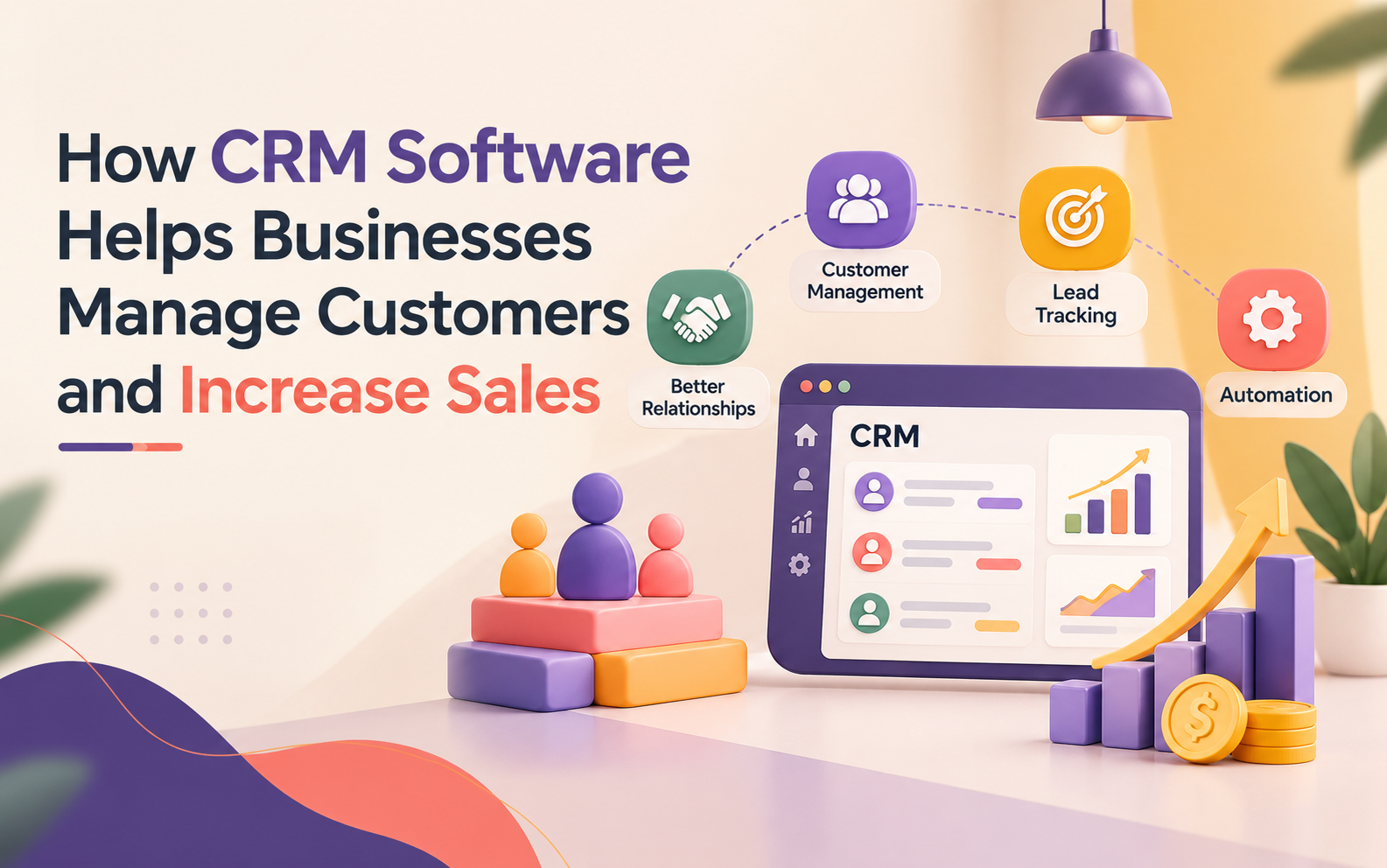
Managing customer relationships is one of the most important parts of running a successful business. From tracking leads to maintaining customer satisfaction, businesses need an organized way to handle every interaction. CRM Software Development helps businesses create systems that simplify customer management, improve communication, and support better sales performance.
What Is CRM Software?
Customer Relationship Management (CRM) software is a digital tool that helps businesses store customer information, track sales activities, manage leads, and monitor interactions in one place. Instead of maintaining separate spreadsheets or records, teams can access updated customer data through a centralized system.
A well-designed CRM system allows businesses to understand customer needs, identify sales opportunities, and maintain consistent communication throughout the customer journey.
How CRM Software Improves Customer Management
Managing multiple customers can become challenging as a business grows. CRM software organizes contact details, purchase history, inquiries, and previous conversations in a single platform. This makes it easier for teams to provide personalized service and respond to customer questions quickly.
CRM systems also help businesses schedule follow-ups, track customer preferences, and maintain long-term relationships. When customers receive timely responses and relevant communication, their trust in a business can improve.
How CRM Software Helps Increase Sales
A structured sales process helps businesses convert more potential customers into paying clients. With CRM Software Development, companies can track leads from their first inquiry to the final purchase, making it easier for sales teams to identify promising opportunities.
CRM tools can also automate repetitive tasks such as follow-up reminders, lead assignments, and sales reporting. These features reduce manual work and allow employees to focus on building relationships and closing deals.
Additionally, sales reports help managers understand team performance, identify bottlenecks, and make informed decisions about future sales strategies.
Why Businesses Need Customized CRM Solutions
Every business has different workflows, customer expectations, and sales goals. A standard CRM platform may not always provide the flexibility required to manage specific business operations. Customized CRM solutions can be designed around a company's requirements, making daily processes more efficient.
A reliable digital solutions company in Jaipur can help businesses identify suitable technologies and develop software that supports their operational needs. Depending on the business, this may include custom dashboards, third-party integrations, automated workflows, and detailed performance reports.
Key Features to Look for in CRM Software
Before selecting a CRM system, businesses should evaluate features that support their daily activities and long-term growth. Important features include:
Contact management: Store and organize customer information.
Lead tracking: Monitor potential customers throughout the sales pipeline.
Task automation: Simplify repetitive activities and follow-ups.
Sales reporting: Measure conversions, revenue, and team performance.
Customer communication history: Keep records of interactions in one place.
Integration capabilities: Connect the CRM with other business tools.
Choosing the right features ensures that the system remains useful as the company expands.
Conclusion
Effective customer management can help businesses build stronger relationships, improve sales processes, and create better customer experiences. Takencode helps businesses explore technology-driven solutions that support smoother operations and sustainable growth. Investing in the right CRM approach can make customer management more organized and help businesses turn valuable opportunities into lasting relationships.